
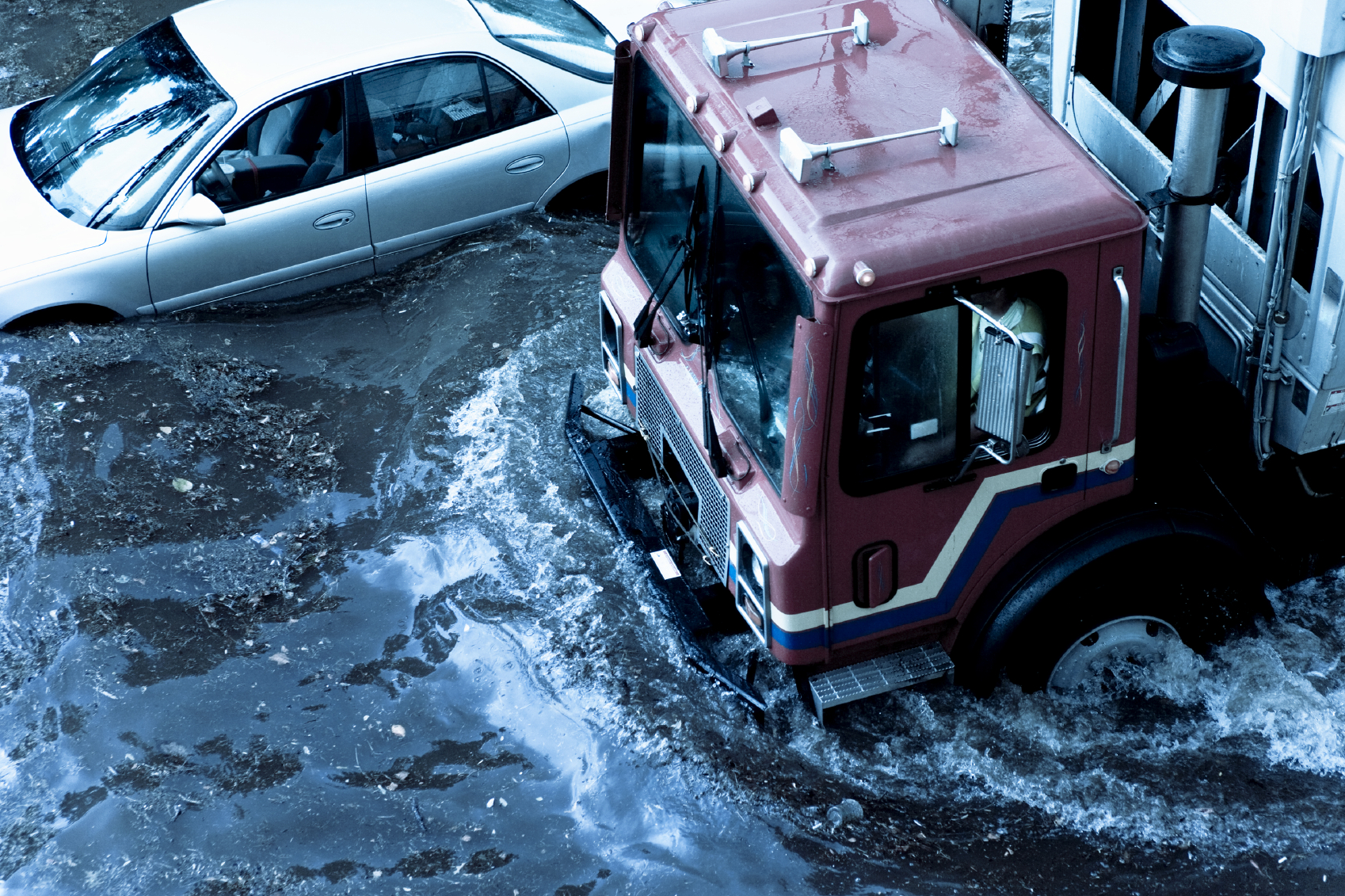
Flooding remains Canada’s most frequent and costly natural hazard and continues to pose a material risk for electricity Local Distribution Companies (LDCs). In Ontario, heavier rainfall, rapid snowmelt, and more intense storm events are increasing both the likelihood and impact of flooding.[i] Flood risk is not limited to physical damage, it directly affects operational continuity, employee safety, regulatory obligations, and public confidence.
Flood damage represents one of the largest and most persistent insurance costs in Ontario, with insured losses now regularly reaching hundreds of millions of dollars annually and, in severe years, exceeding $1 billion. In 2024 alone, flooding events in southern Ontario generated over $1 billion in insured losses, making it the second‑costliest flood year in the province’s history after 2013, according to industry loss estimates compiled by CatIQ and reported by the Insurance Bureau of Canada (IBC).[ii]
Over the past decade, the IBC has reported that insured losses from catastrophic weather—including floods—have more than tripled compared to the previous decade, reflecting both increasing event frequency and rising repair costs. As a result, flooding has shifted from a sporadic catastrophe exposure to a structural, recurring cost driver in Ontario’s property insurance market, with significant implications for premiums, deductibles, and availability of coverage.
Flood risk is no longer a low‑frequency or seasonal concern. Provincial authorities report that flood conditions can develop quickly and escalate with limited warning, affecting both urban and rural areas across Ontario. Service yards, operations centres, warehouses, IT and communications rooms, and fleet access routes are all vulnerable if preparedness measures are not in place.
From a risk management perspective, flood preparedness is a core enterprise control. The ability to anticipate conditions, make timely decisions, and execute predefined actions directly influences the severity of impacts, the safety of personnel, and the speed of recovery.
Ontario’s flood forecasting and warning system is coordinated through the Surface Water Monitoring Centre in partnership with local Conservation Authorities.[iii] These organizations monitor weather, snowpack, river levels, and watershed conditions, and issue standardized flood messages that escalate as risk increases.
Members can access this information by visiting this site: Surface Water Monitoring Centre | ontario.ca[iv]
Clear internal accountability for monitoring flood messages and escalating decisions ensures that warnings translate into action rather than delay. Advance awareness allows organizations to move deliberately from monitoring to preparation to active response.
Effective flood risk management emphasizes actions taken before conditions deteriorate. Identifying critical assets, maintaining drainage and backup power systems, and establishing clear escalation authority reduces reliance on improvised decision‑making during fast‑moving events.
When flooding becomes imminent, safety must remain the priority. Response actions should focus on protecting people, limiting damage where it can be done safely, and documenting conditions to support recovery and insurance processes. Recovery should proceed only once authorities confirm it is safe to re‑enter affected areas, with structured inspections and controlled re‑energization of equipment.[v]
Taken together, these points reinforce that effective flood management is less about reacting to a single event and more about governing a known risk over time. When flood risk is recognized as an enterprise issue, early warning systems are tied to clear decision authority, and roles are well understood, organizations are better positioned to act decisively rather than improvise. Checklists translate plans into consistent action during high stress situations, while sustained preparedness protects service reliability and strengthens public confidence in an LDC’s ability to operate safely through disruptive conditions.
If you would like to have a checklist for Flood risk Management, click below:

[i] Government of Ontario. (2020). Protecting people and property: Ontario’s flooding strategy. https://www.ontario.ca/page/protecting-people-property-ontarios-flooding-strategy
[ii] Insurance Bureau of Canada. (2025). 2024 shatters record for costliest year for severe weather-related losses in Canadian history. https://www.ibc.ca/news-insights/news/2024-shatters-record-for-costliest-year-for-severe-weather-related-losses-in-canadian-history-at-8-5-billion
[iii] Government of Ontario. (n.d.). Surface Water Monitoring Centre. https://www.ontario.ca/page/surface-water-monitoring-centre
[iv] Government of Ontario. (n.d.). Surface Water Monitoring Centre. Ontario Ministry of the Environment, Conservation and Parks. https://www.ontario.ca/page/surface-water-monitoring-centre
[v] Intact Centre on Climate Adaptation. (2024). A flood risk check‑up for Canadian municipalities: Tackling flooding together. University of Waterloo. https://www.intactcentreclimateadaptation.ca/municipal-flood-risk-check-up/
At The MEARIE Group, we remain committed to providing the most up-to-date insights on risk management and industry best practices. Should you have any questions or require further information, please do not hesitate to reach out.
For more information on this topic, contact us to learn more.
